Shape a quieter outdoor retreat with Japandi patio ideas like low seating, gravel gardens, stone paths, bamboo, muted planters, water features, and simple natural textures.
- Japandi patios rely on restraint, natural materials, and strong spatial balance.
- Zen vibes come more from what is edited out than from adding extra decor.
- Texture, proportion, and gentle transitions matter more than decoration in this style.
1. Start with low wooden seating and a neutral palette
Low seating immediately changes the pace of a patio and makes the space feel more grounded. Soft neutrals keep the overall mood calm and uncluttered.
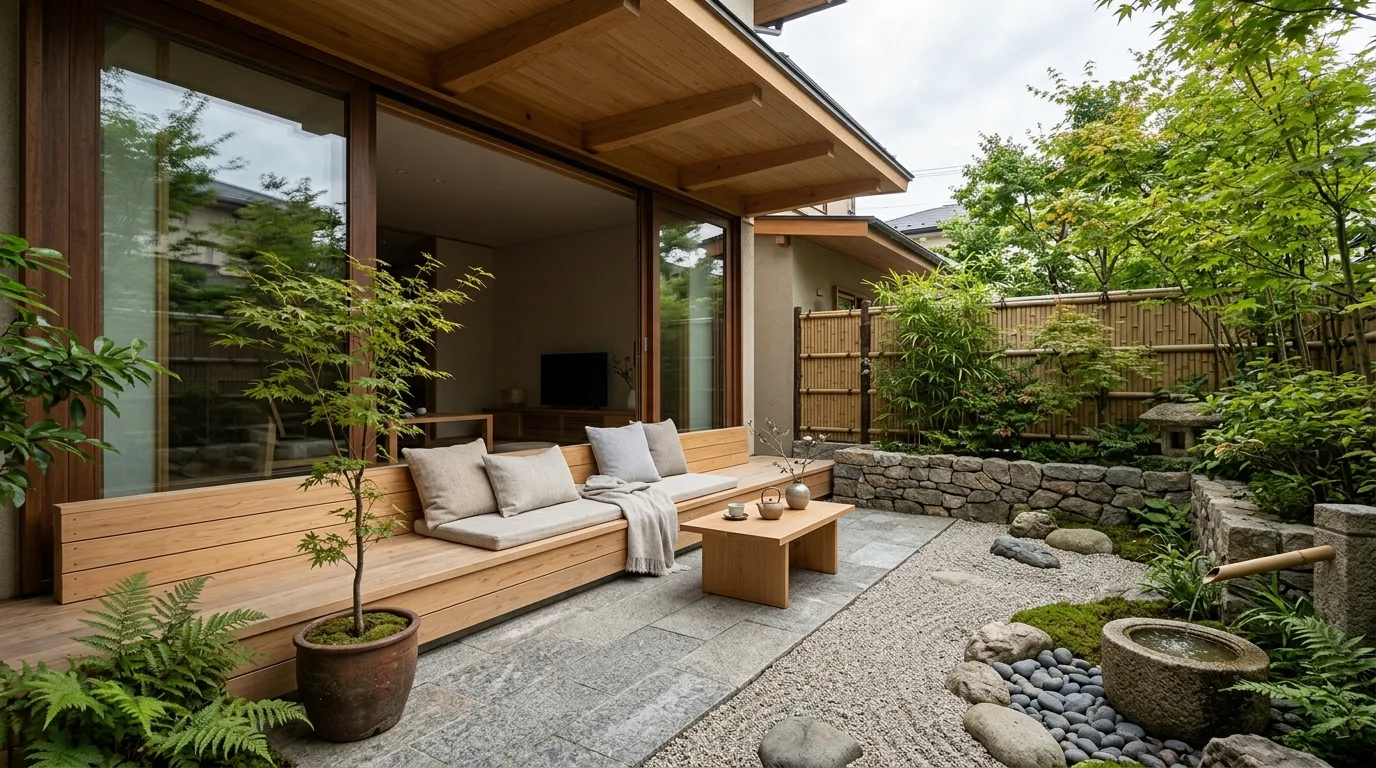
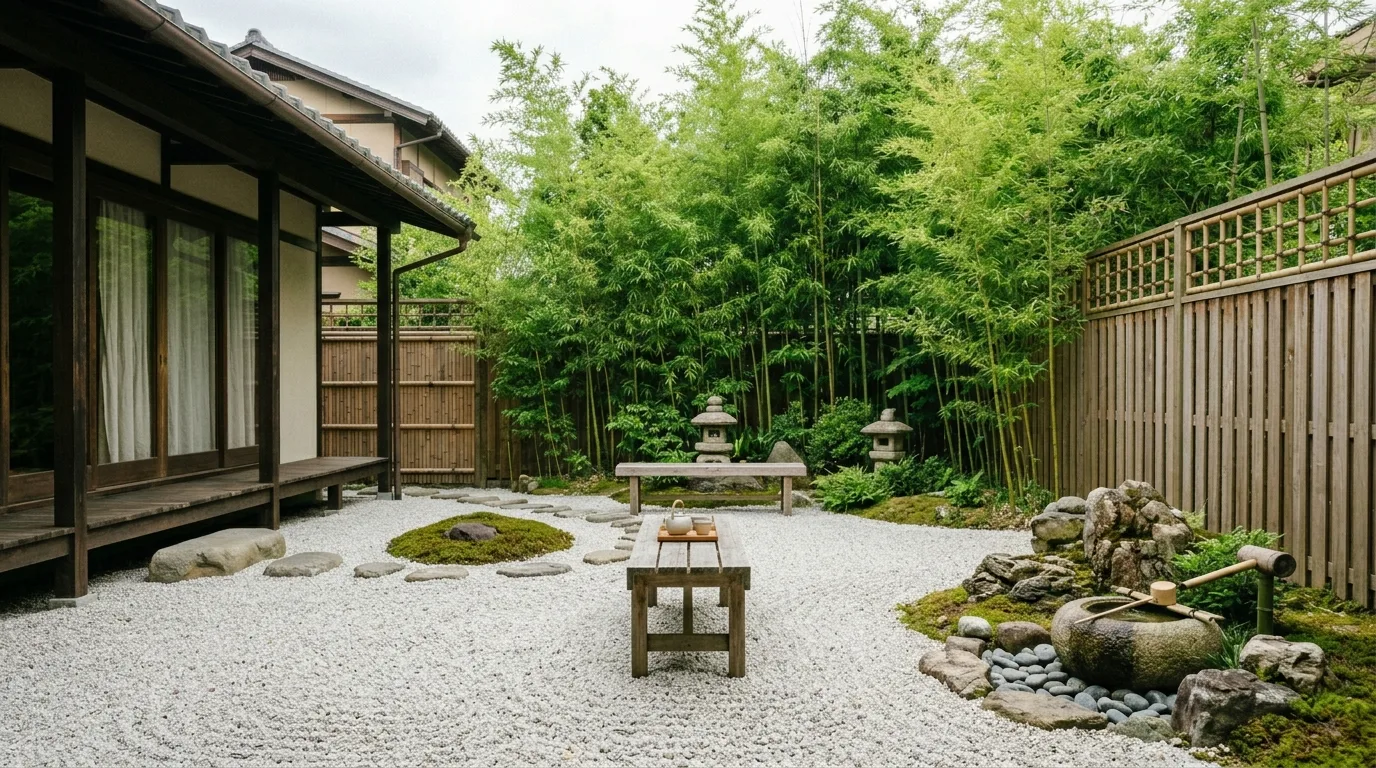
2. Use gravel and bamboo for a quieter foundation
Bamboo and gravel create a very simple but effective base for a Zen-inspired outdoor room. They introduce texture and rhythm without visual noise.
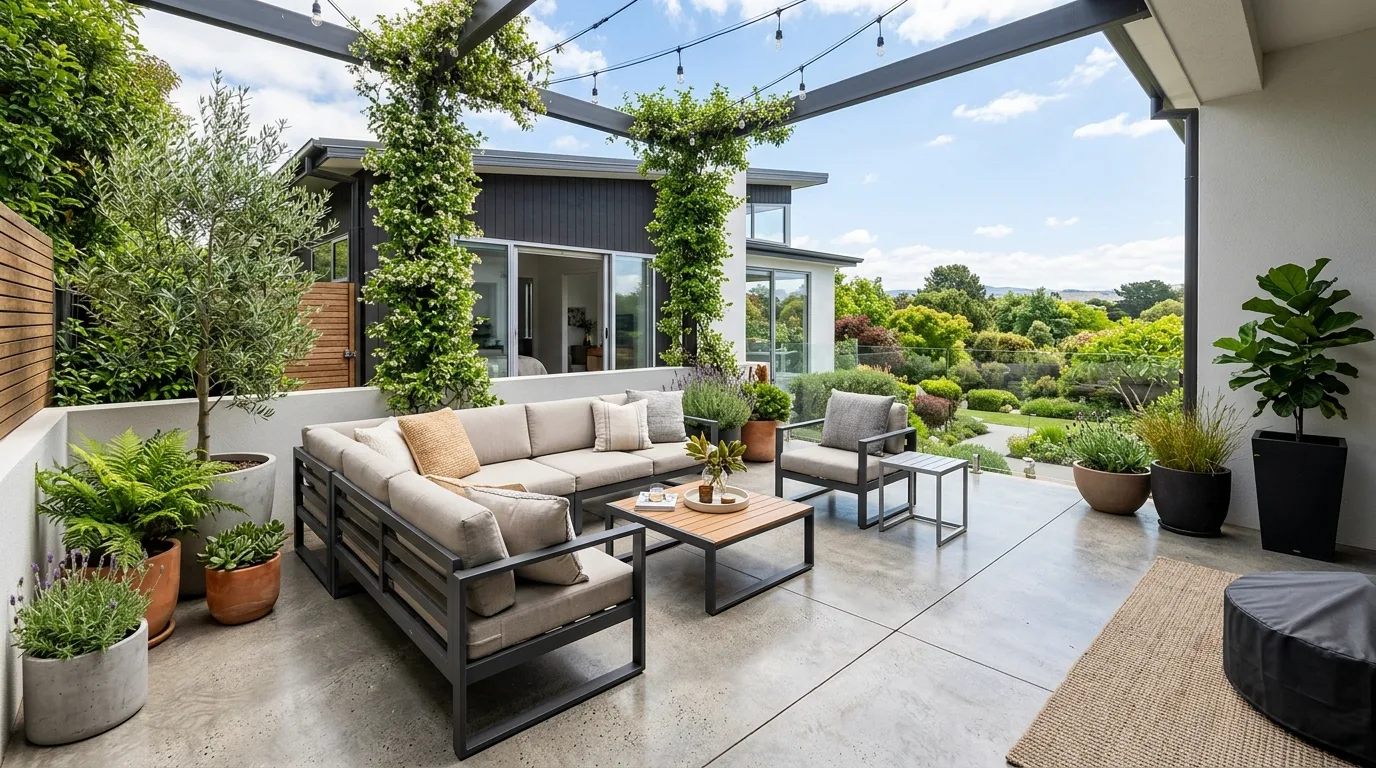
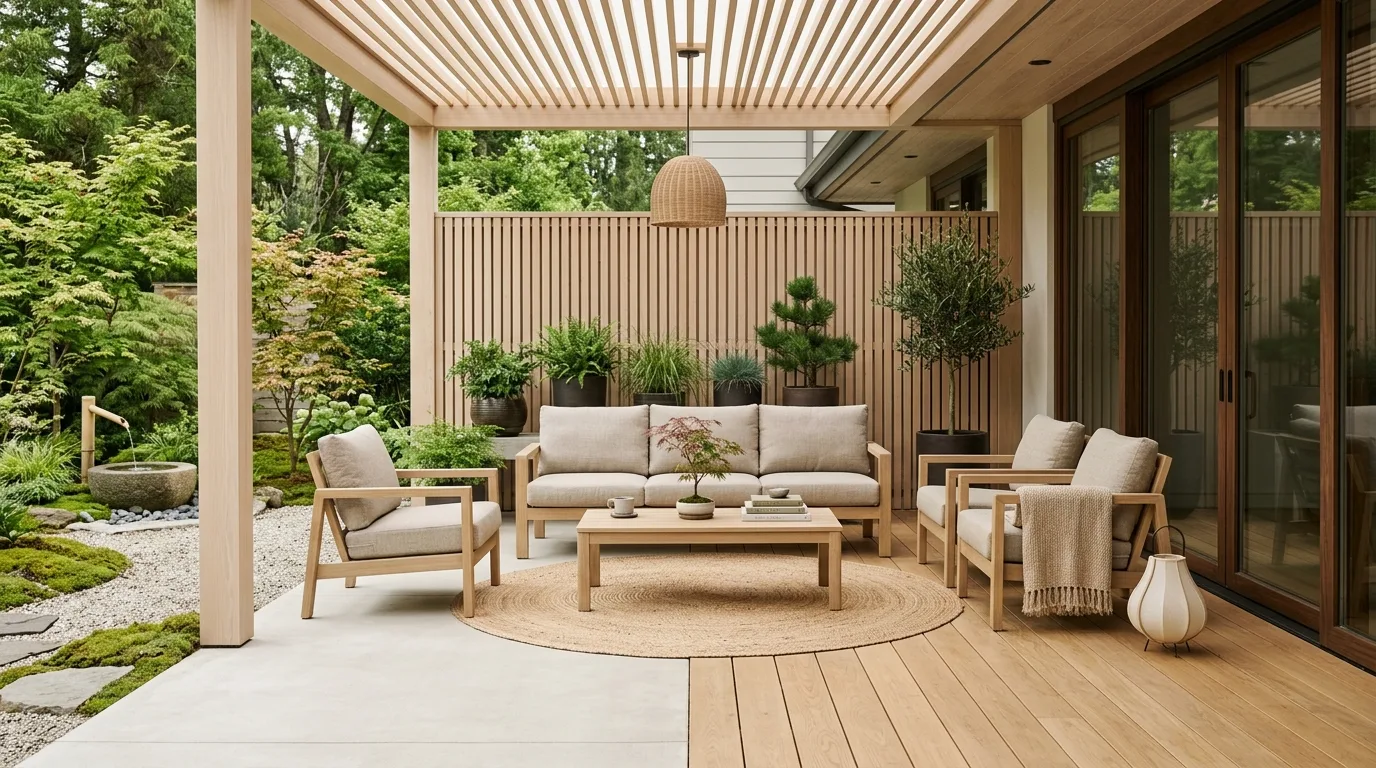
3. Keep furniture lines clean and materials light
Japandi styling works best when the furniture feels honest, quiet, and carefully proportioned. Lighter wood helps the patio feel open and balanced rather than heavy.
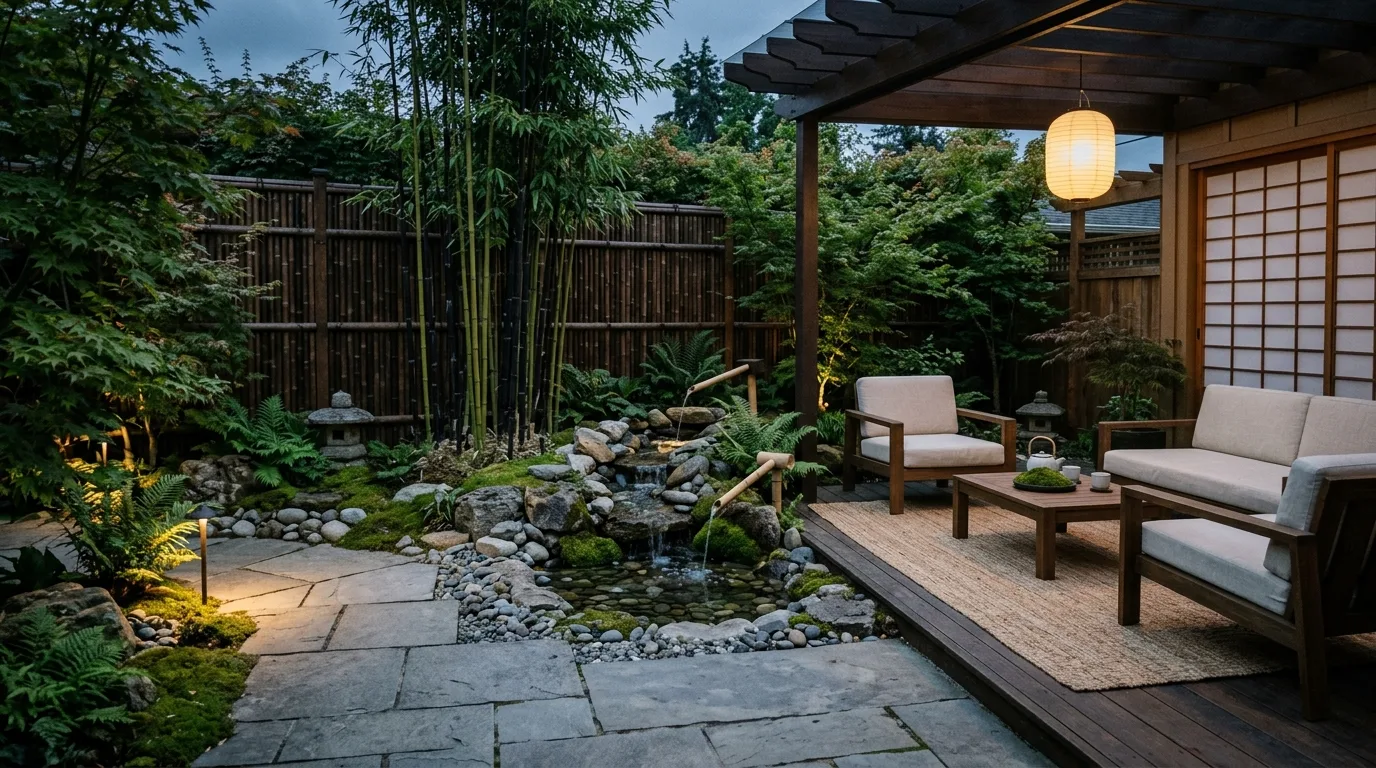
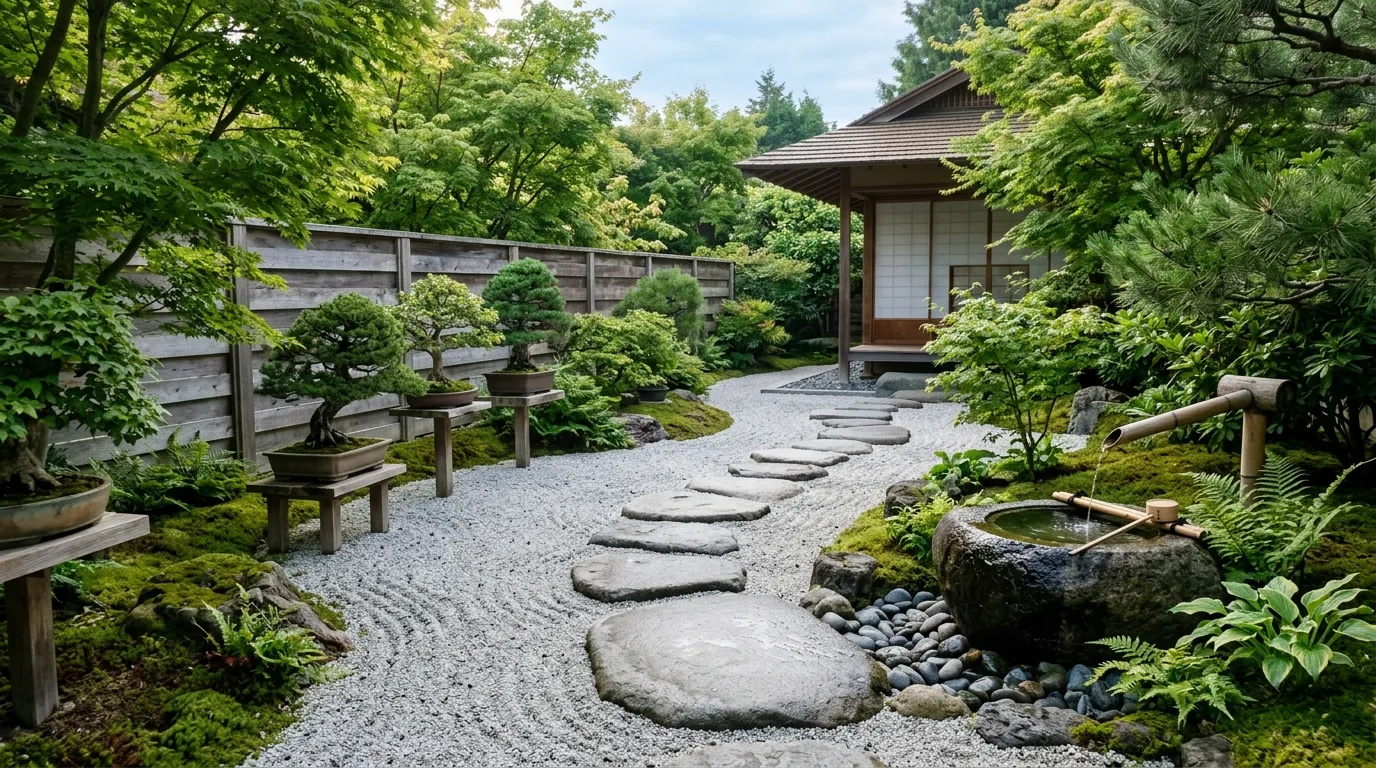
4. Add a smooth stone path and a small water feature
Stone and water reinforce the sense of calm while giving the patio a stronger journey through the space. These details feel especially meaningful in a more meditative setting.
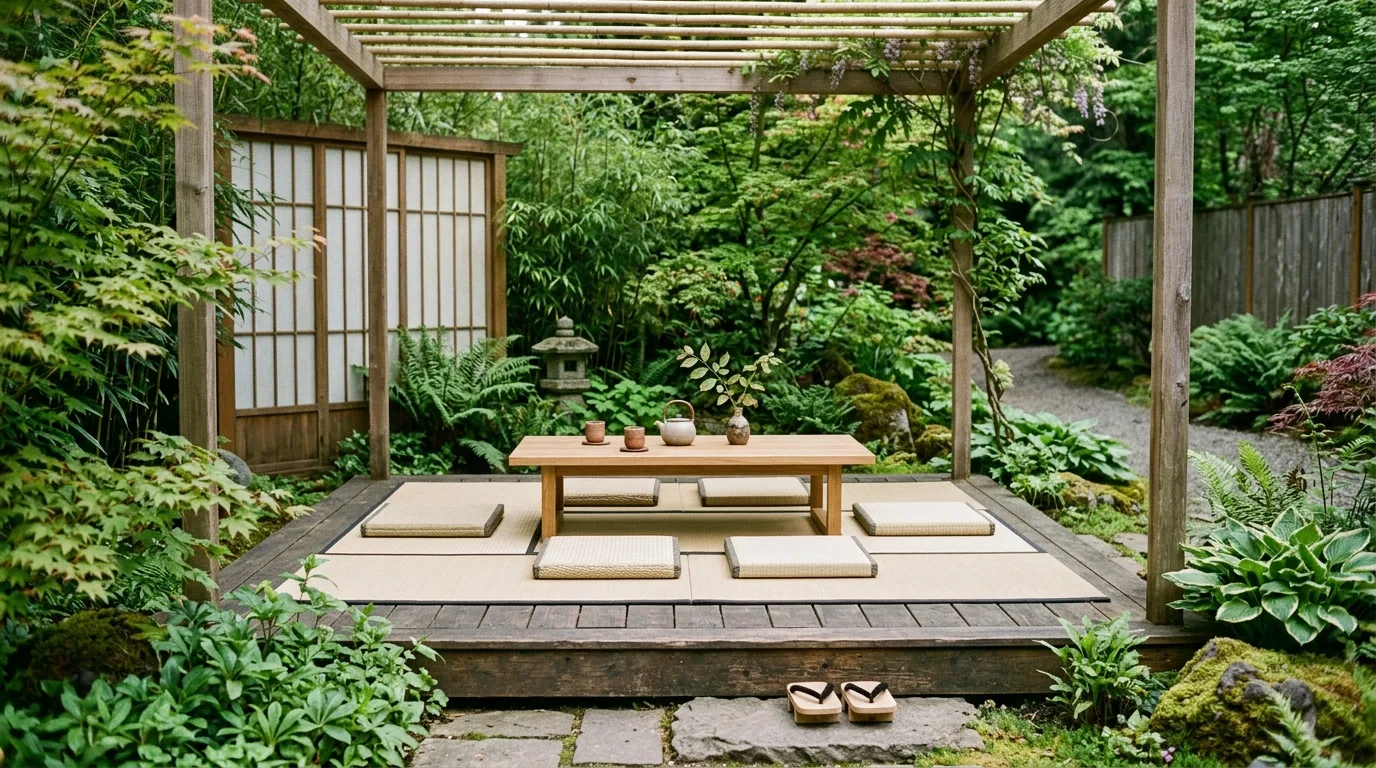
5. Use floor-level cushions around a low table
Low gathering arrangements can make a patio feel more intimate and relaxed without needing much furniture. This is a strong fit for small courtyards and quieter corners.
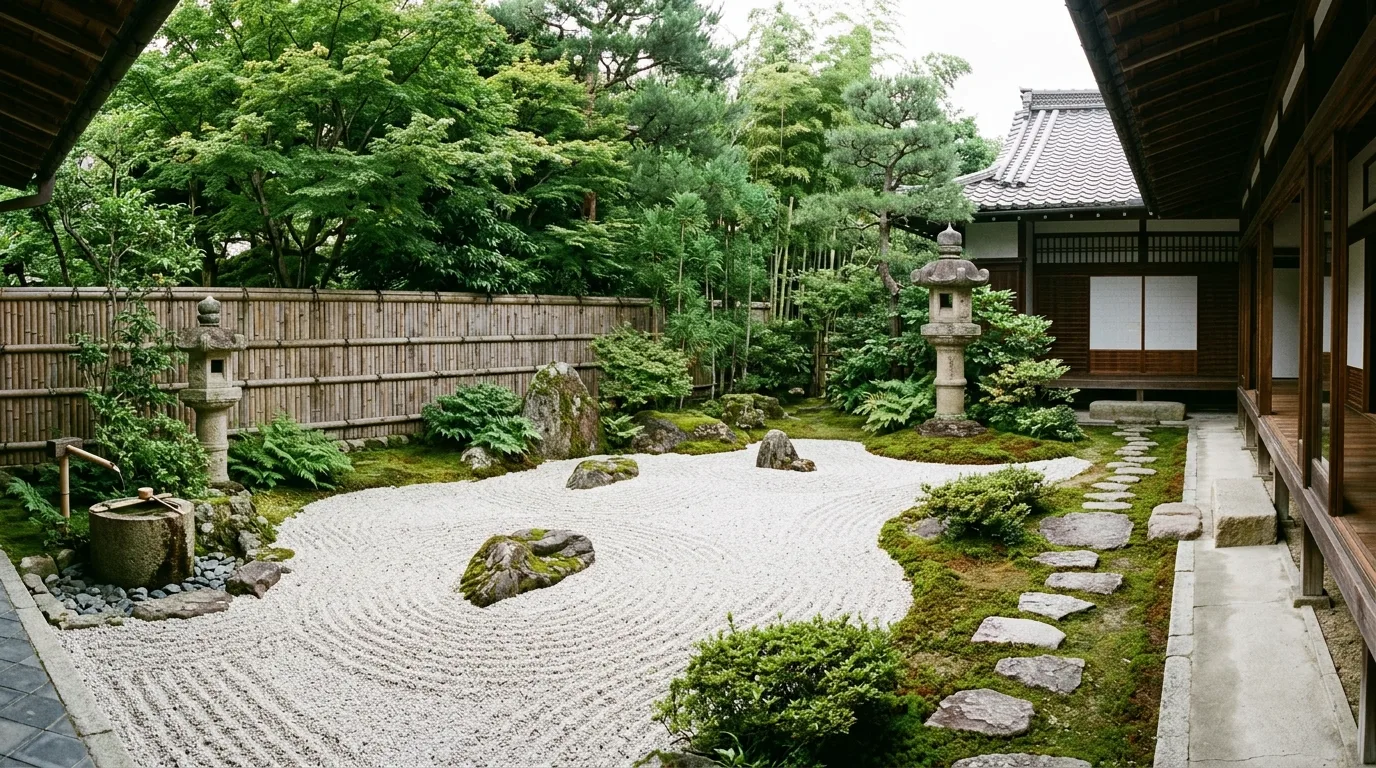
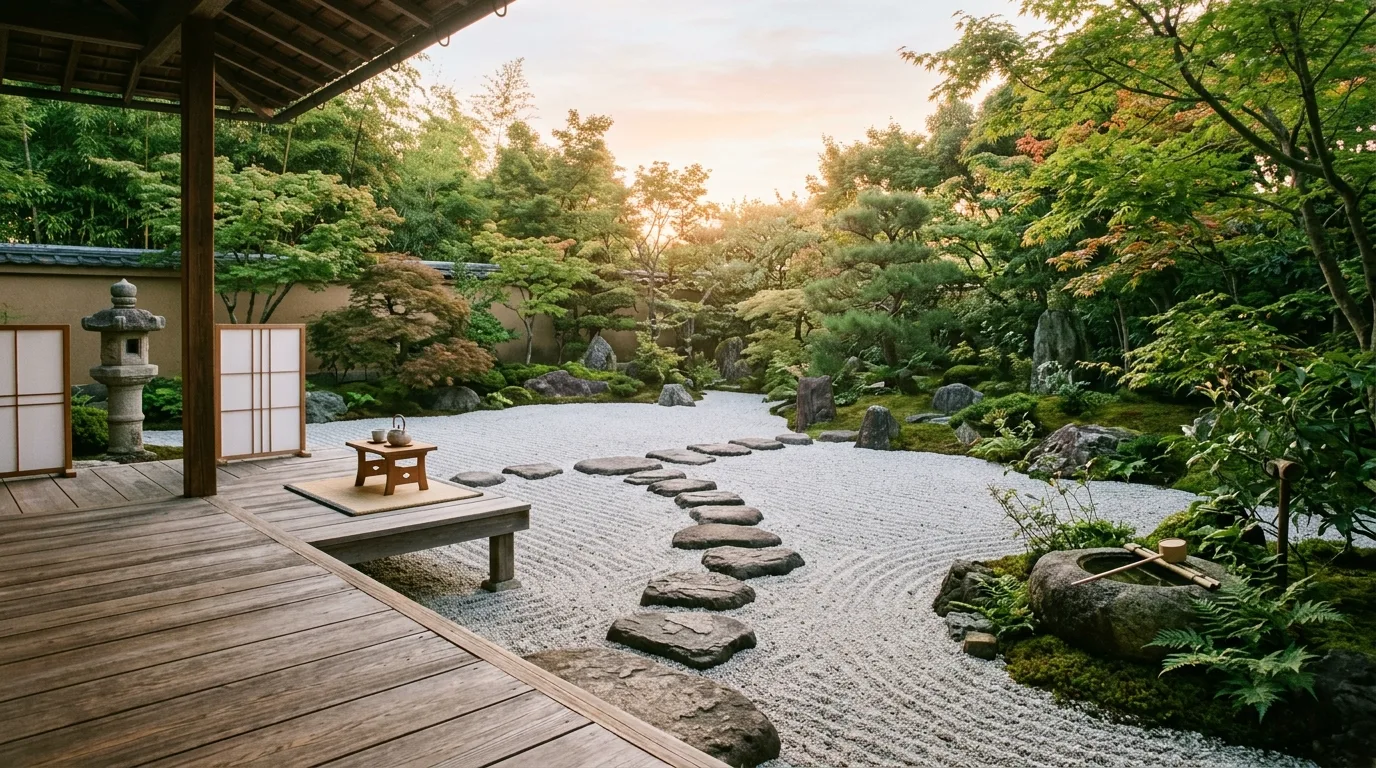
6. Rake gravel and add stone lanterns for ritual and rhythm
Raked gravel introduces a sense of order and calm movement into the patio. Stone lanterns deepen the Zen mood without making the space feel decorated for decoration’s sake.
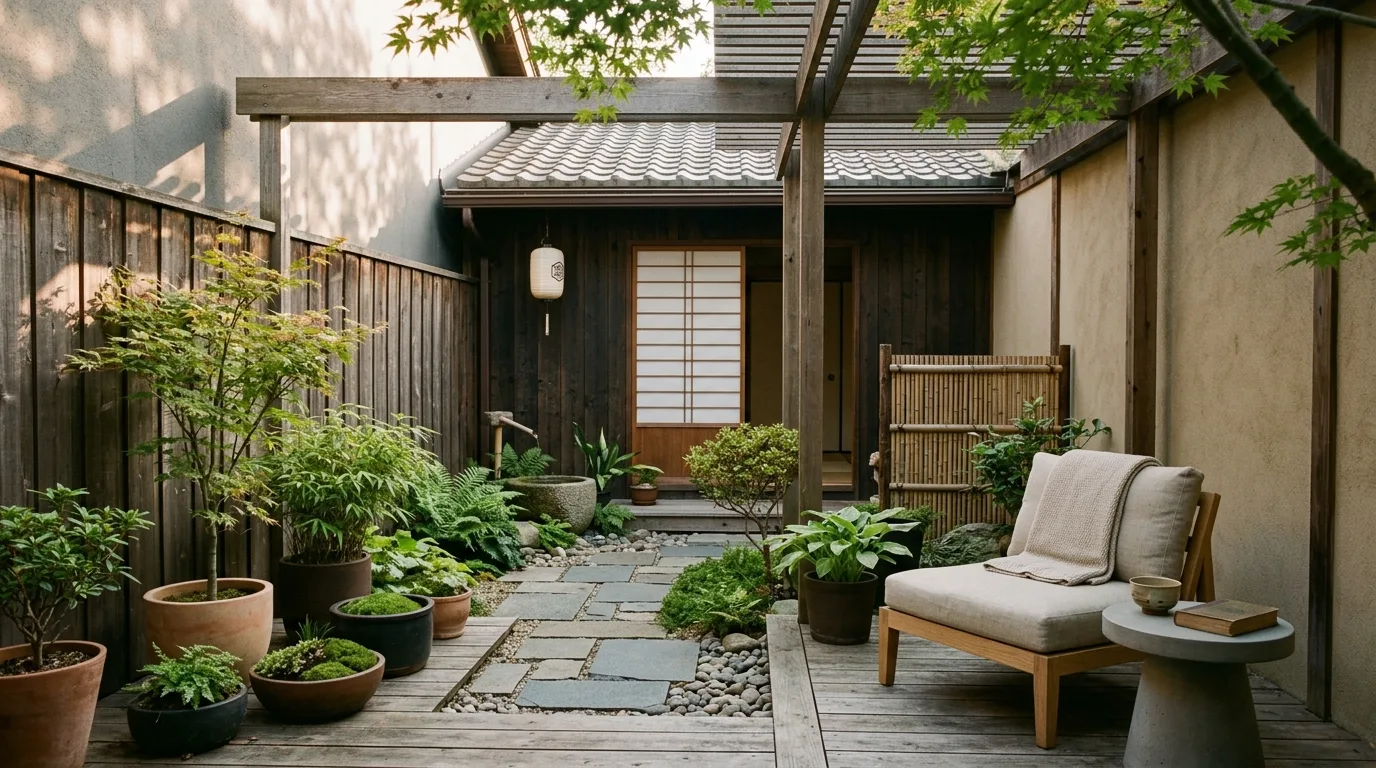
7. Keep the courtyard muted and softly planted
A small Japandi patio often feels best when the planting stays simple and the palette remains quiet. Muted tones help shadows, textures, and shapes do more of the visual work.
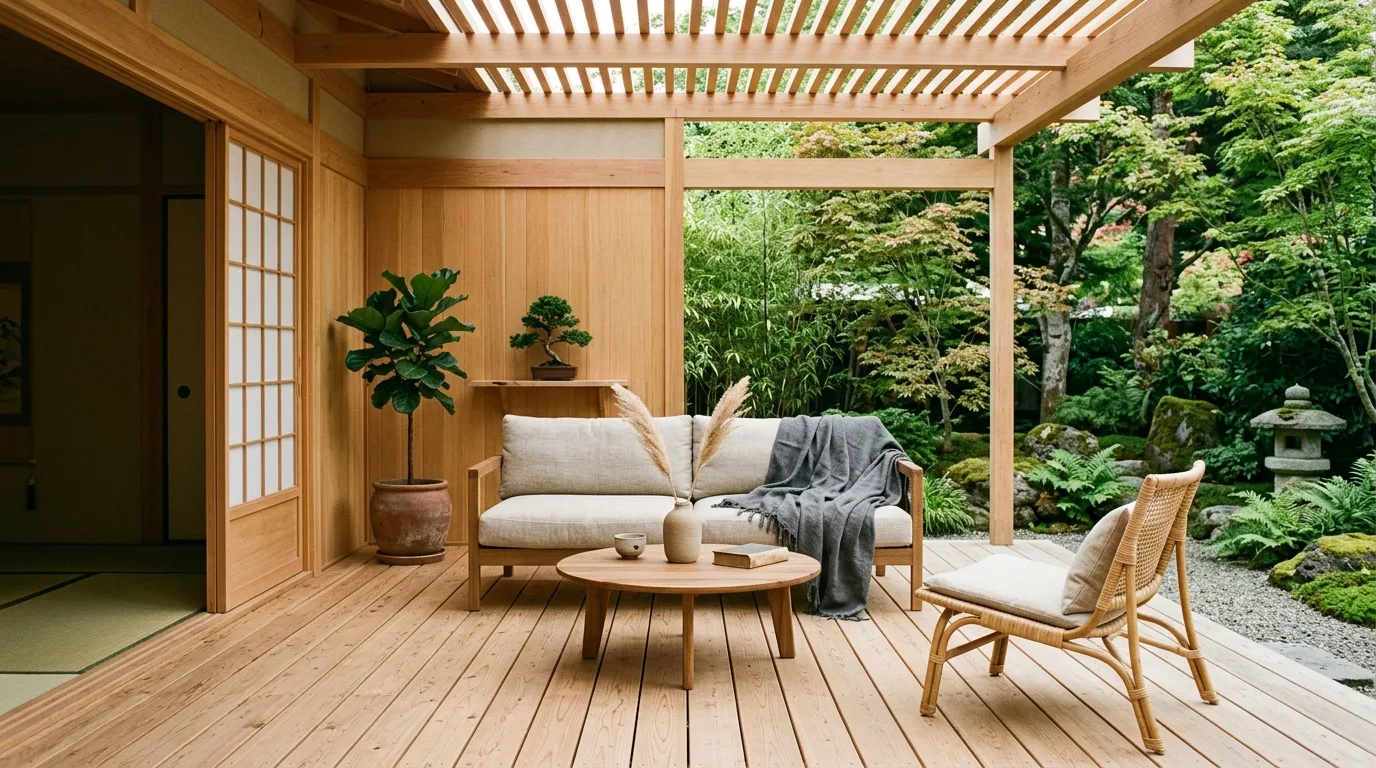
8. Use linen textiles on a pared-back wooden deck
Soft textiles can warm up a minimal patio without ruining its restraint. Linen is especially effective because it brings texture while still feeling quiet and natural.
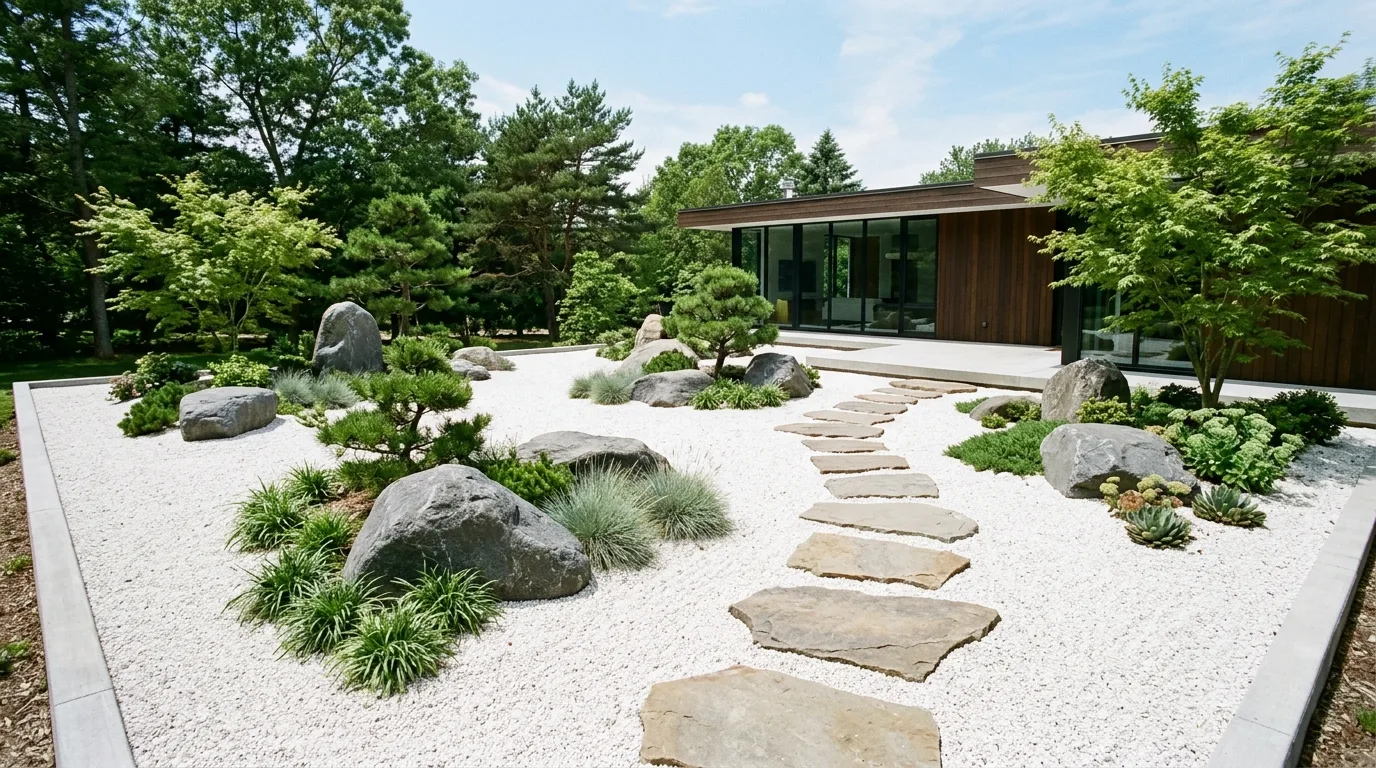
9. Let stepping stones float through sand or gravel
A simple stepping-stone layout can make the patio feel more contemplative by slowing movement through it. The surrounding open material keeps the composition calm and breathable.
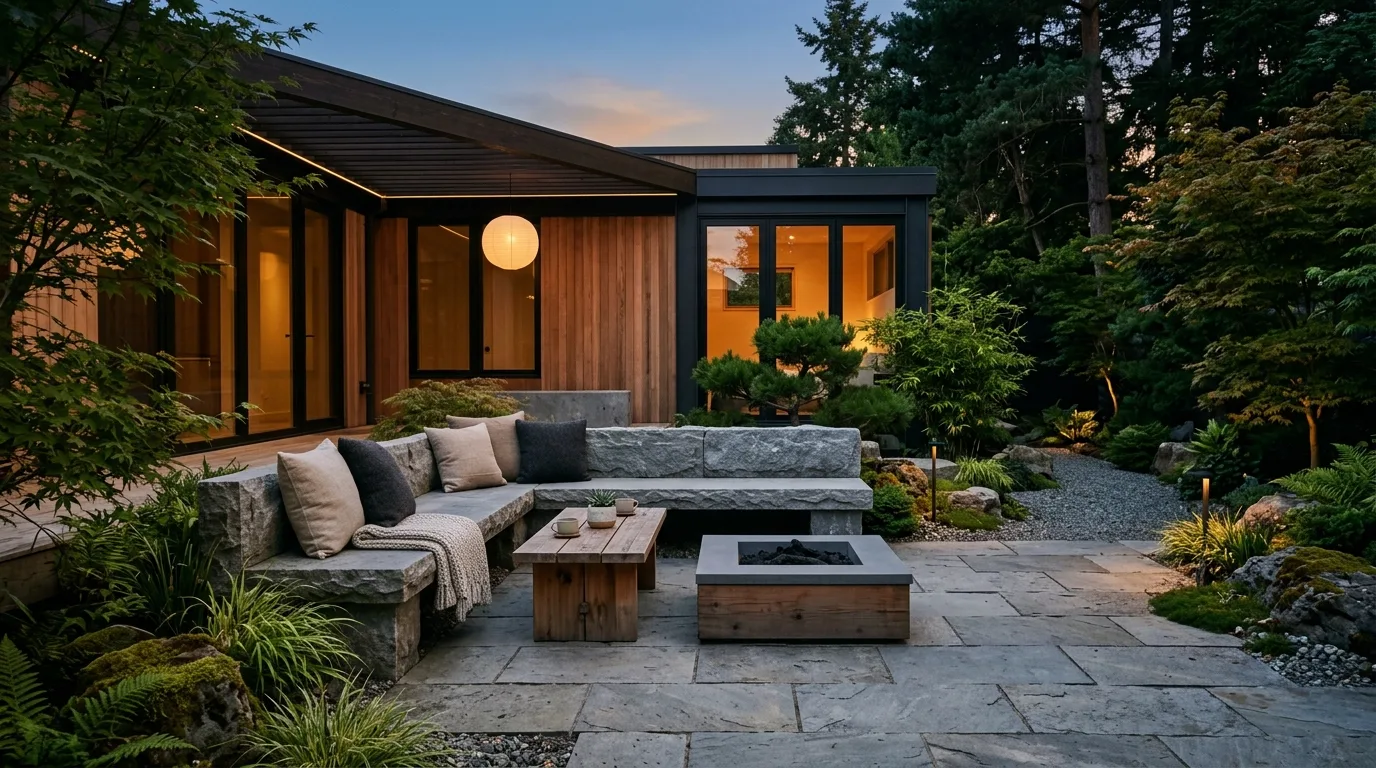
10. Use stone seating and subtle greenery for evening calm
A stronger architectural base can still feel serene when softened with minimal planting and warm light. The key is keeping the whole composition disciplined.
11. Layer wood, stone, and planting into one peaceful retreat
The best Japandi patios feel complete because every material belongs to the same quiet story. Balanced textures are what make the retreat feel thoughtful rather than empty.
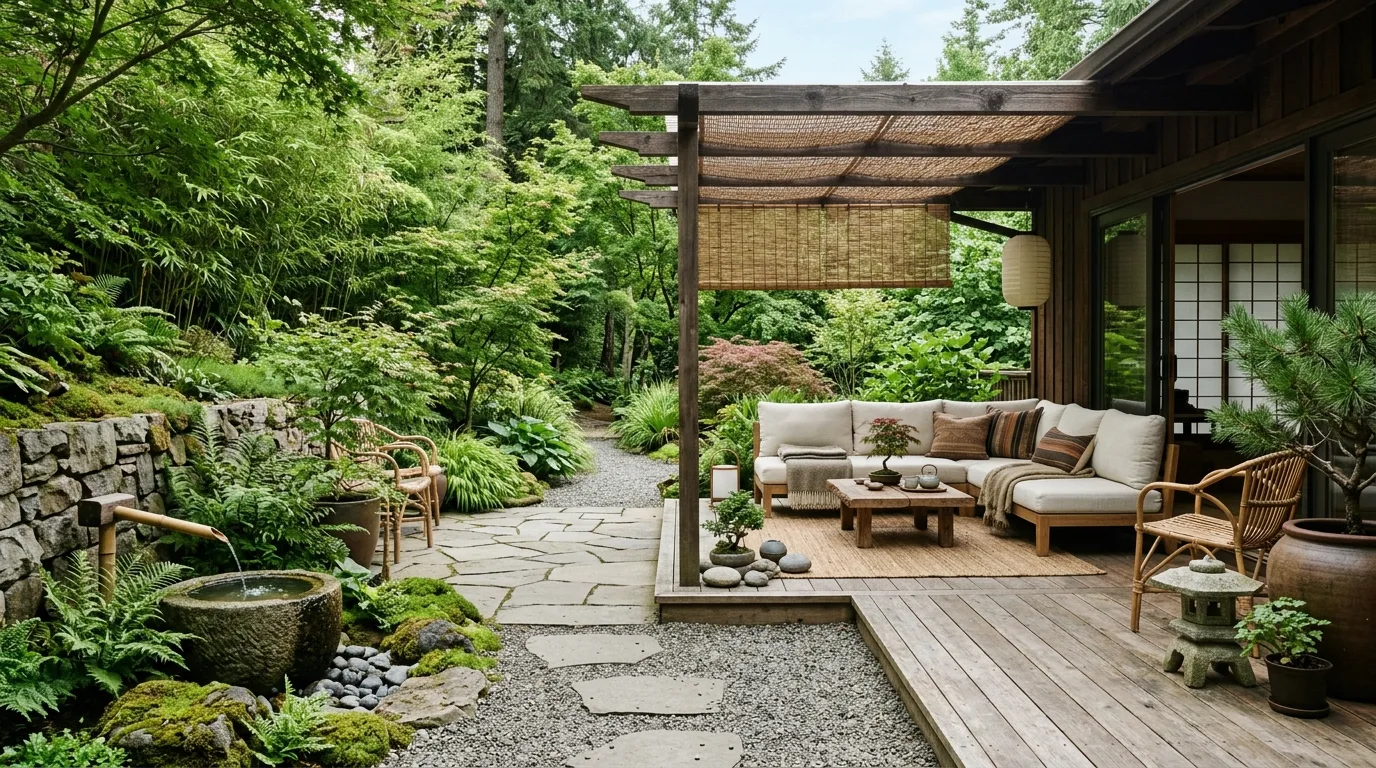
12. Finish with a soft water feature and bamboo accents
Gentle sound and simple natural structure can make a patio feel deeply meditative without adding clutter. This final layer helps the whole space settle into its Zen mood.