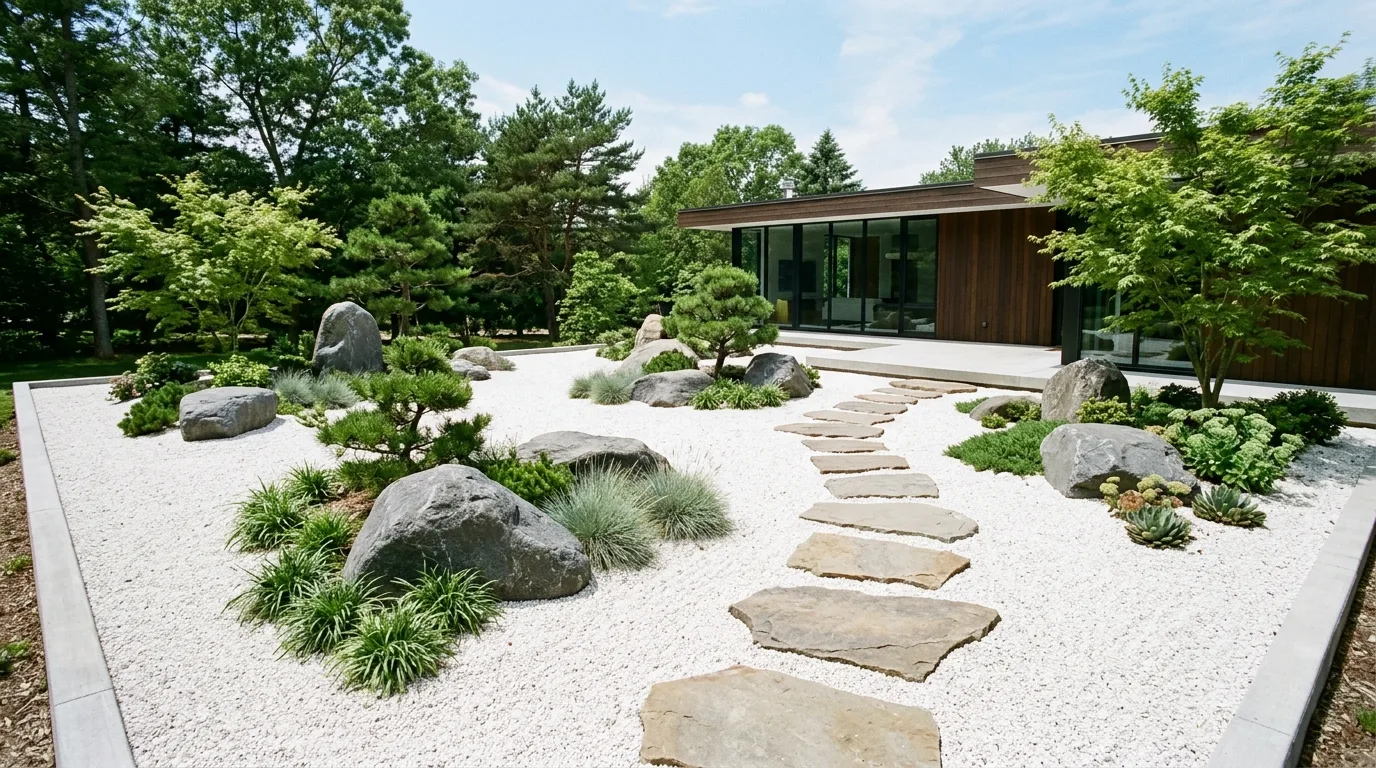
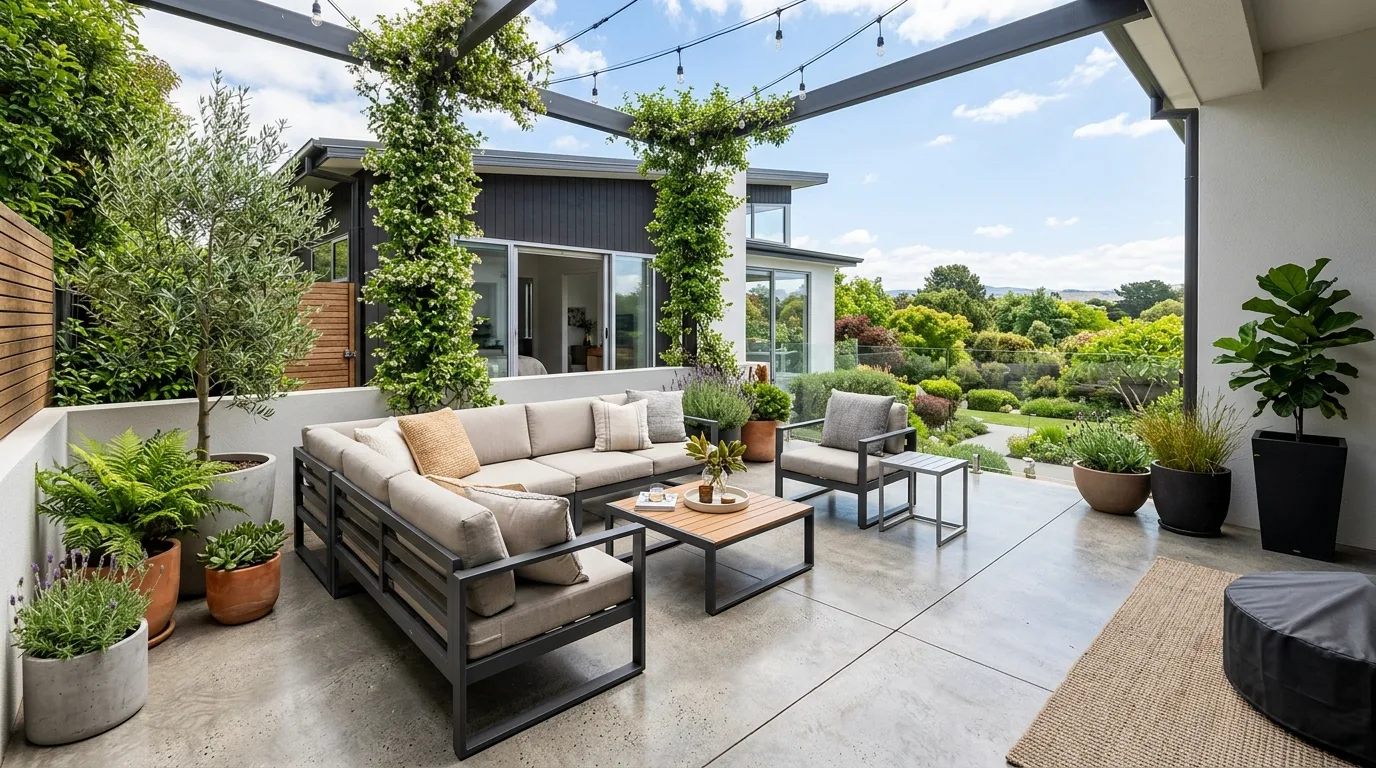
Plan a rooftop patio more clearly with layout zoning, furniture placement, pergola positioning, planter separation, compact solutions, and entertaining-focused organization.
- Zoning matters on rooftops because every piece has to justify the space it takes up.
- Shade, seating, planters, and circulation should be considered together, not one at a time.
- A finished rooftop patio feels calm and useful because the planning solved problems early.
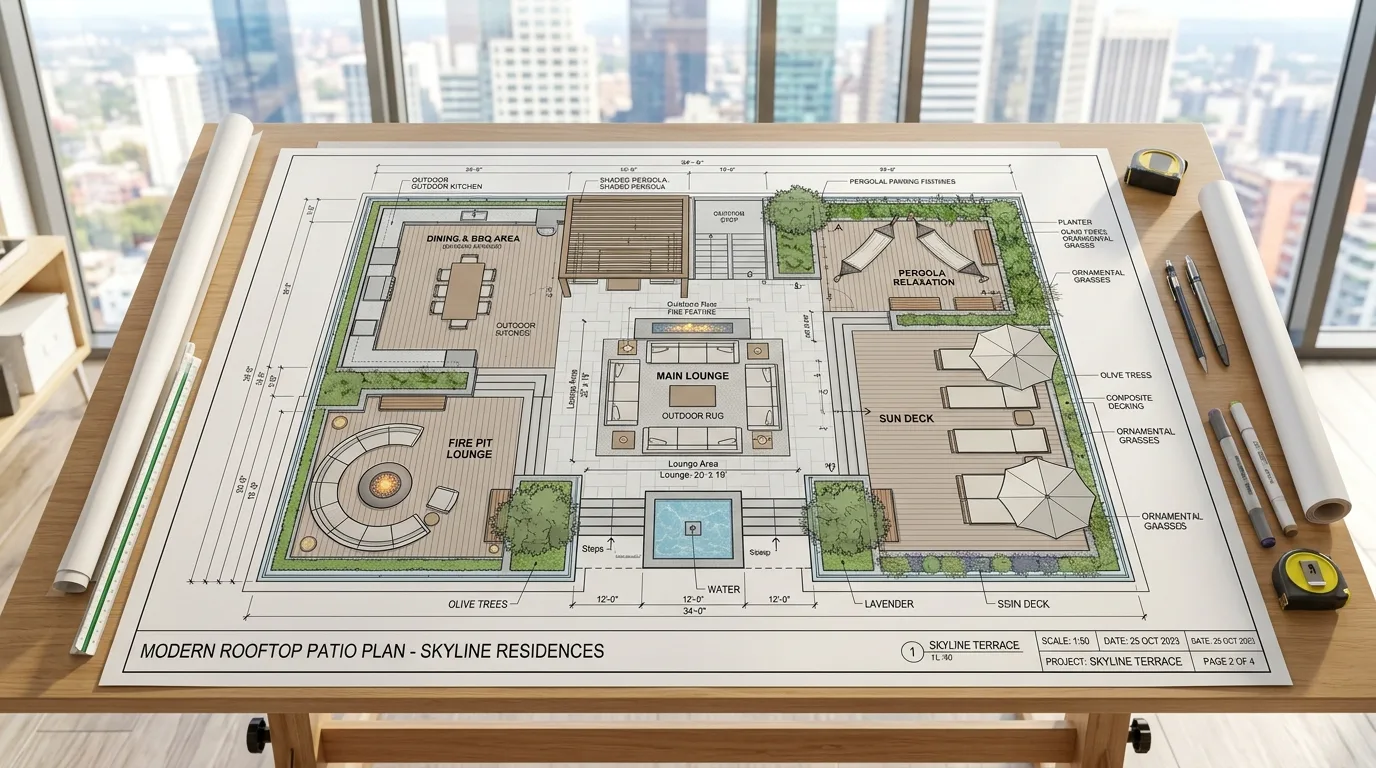
1. Start by mapping clear activity zones
A rooftop patio works better when lounging, dining, greenery, and circulation are planned deliberately from the beginning. Even a simple sketch can make the final layout much stronger.
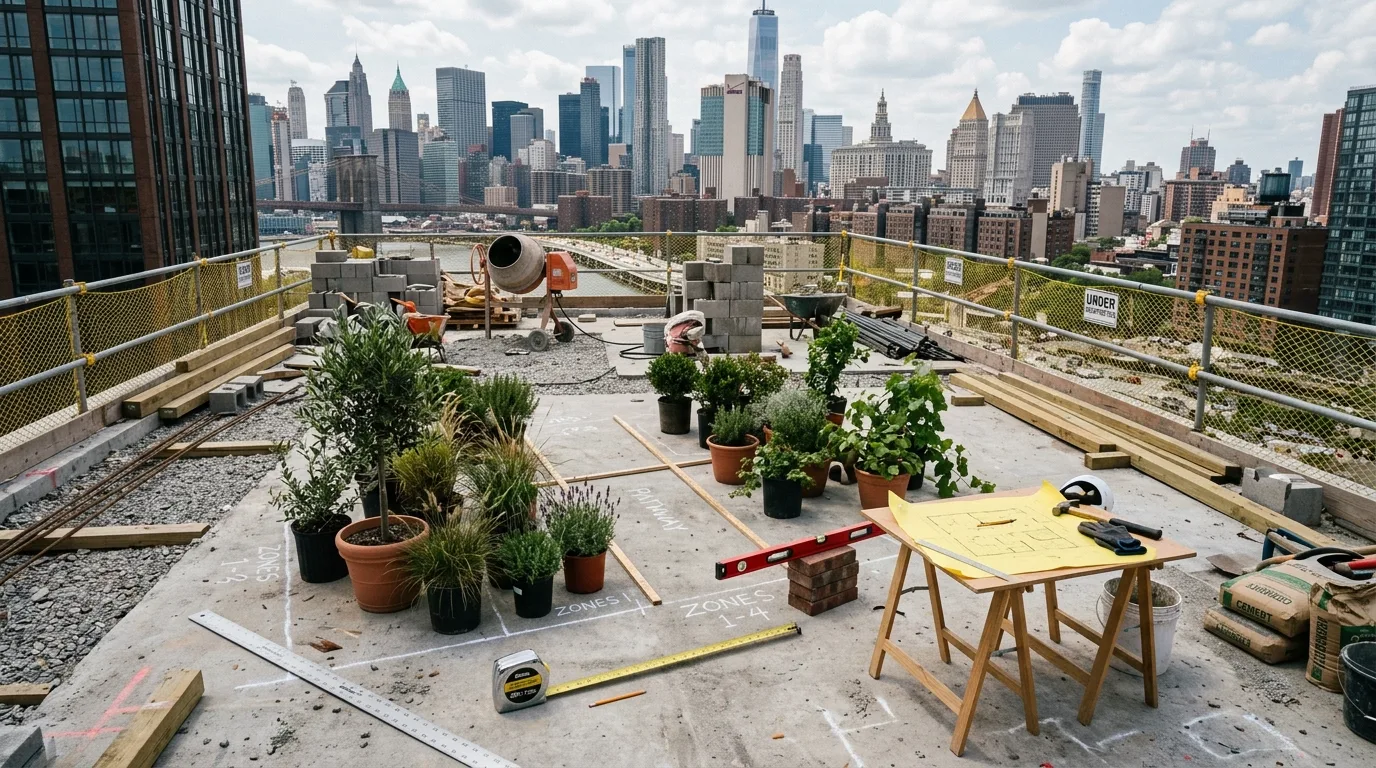
2. Test the layout before fully installing it
Placing furniture and plants temporarily helps you see what the rooftop really needs before committing. This is especially useful when the footprint is compact or the skyline views matter.
3. Plan for the rooftop you want to end with
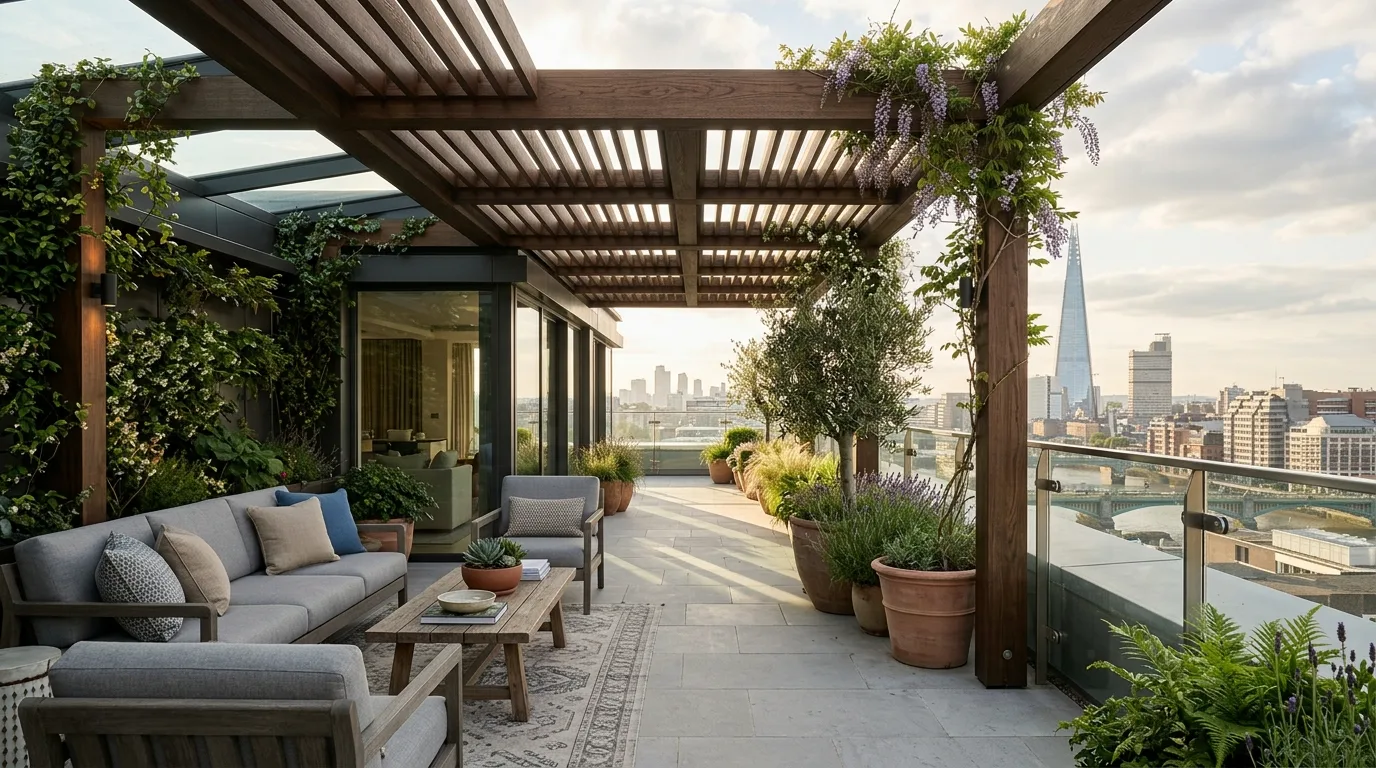
Seeing a finished rooftop with seating, pergola, and planters makes it easier to reverse-engineer the steps needed to get there. A clear end vision keeps the choices more focused.
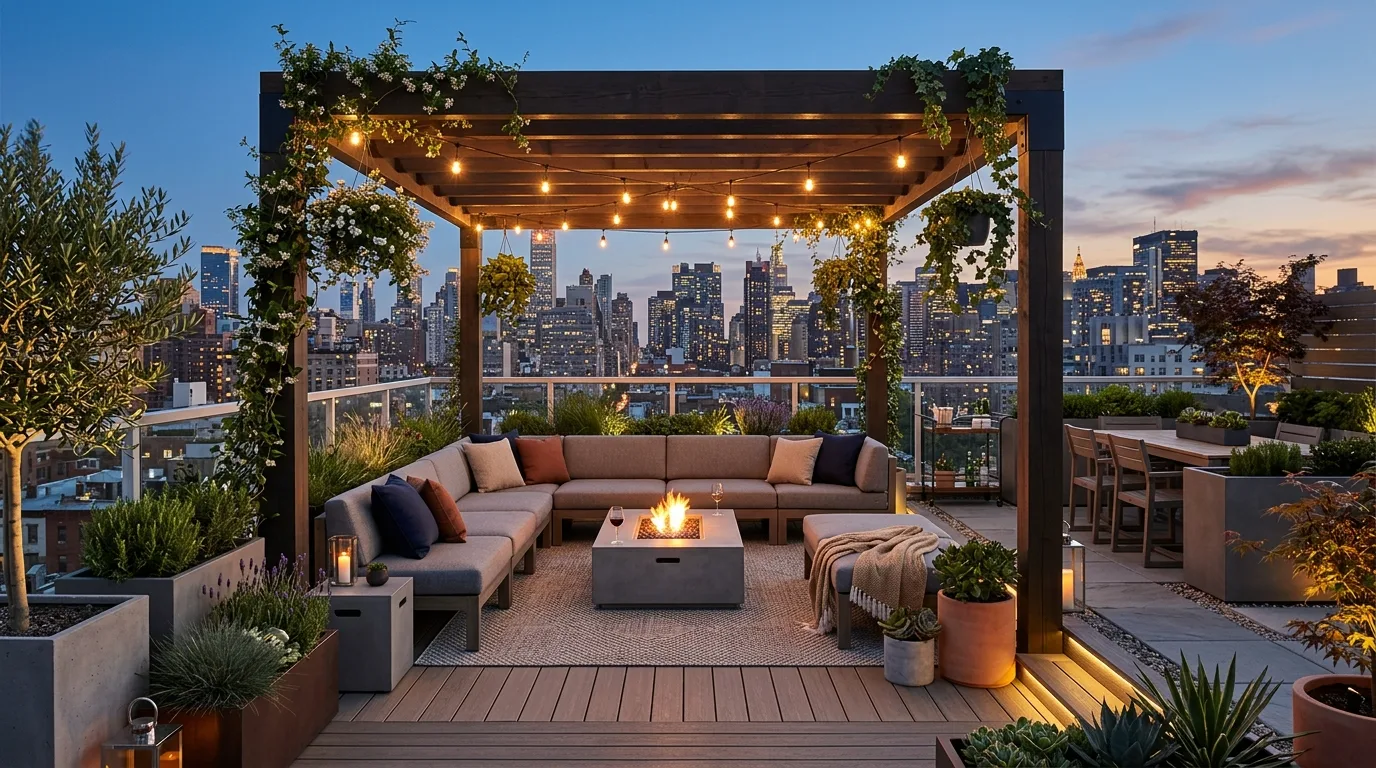
4. Separate dining and lounging from the start
Rooftop patios often feel smaller than they are when every function overlaps awkwardly. Creating clear zones helps the space feel calmer and more usable.
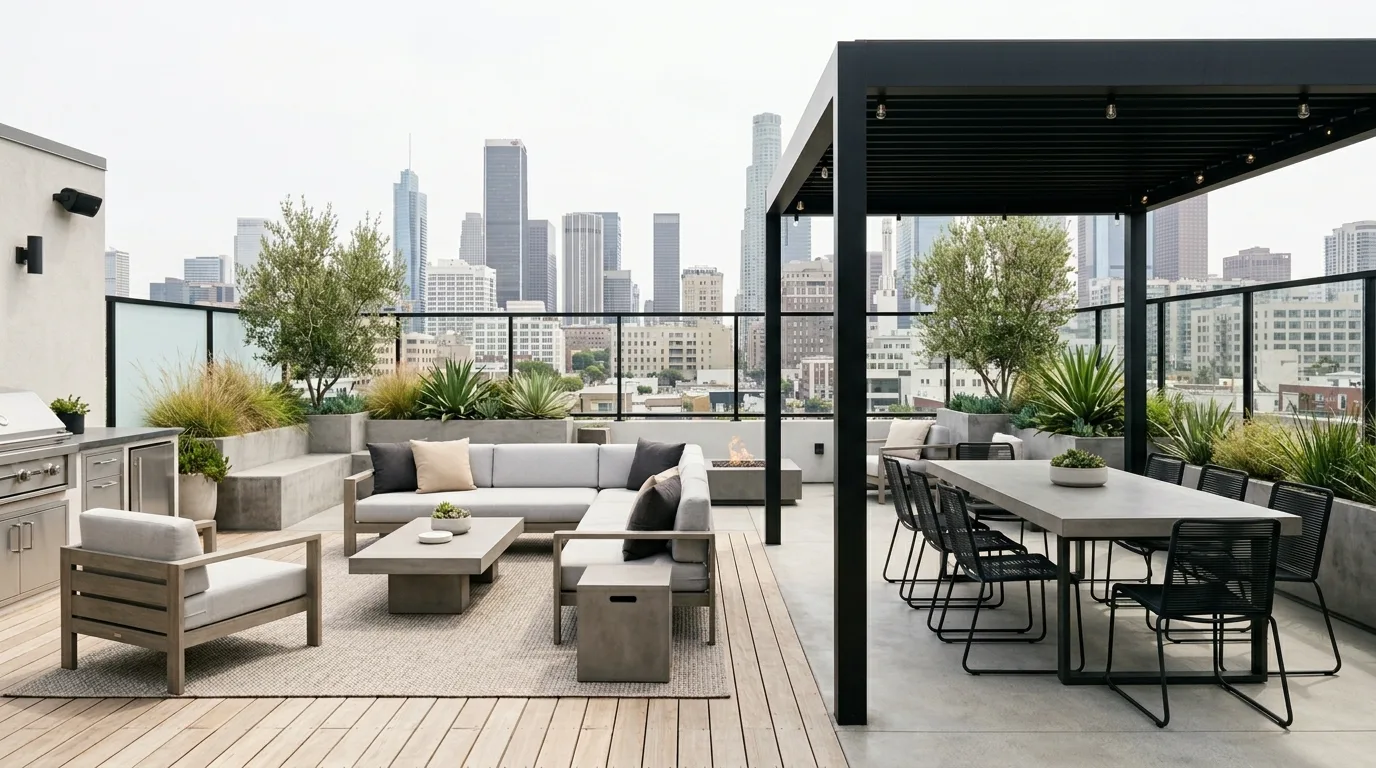
5. Use measurements as part of the design process
A rooftop plan improves dramatically when actual dimensions guide furniture size and placement. It keeps the final layout from feeling cramped or oddly scaled.

6. Make the lounge area feel grounded and cozy
Rugs, sectional seating, and a tighter grouping can help a rooftop feel more like an outdoor room than a bare open surface. Warm lighting only strengthens that effect.
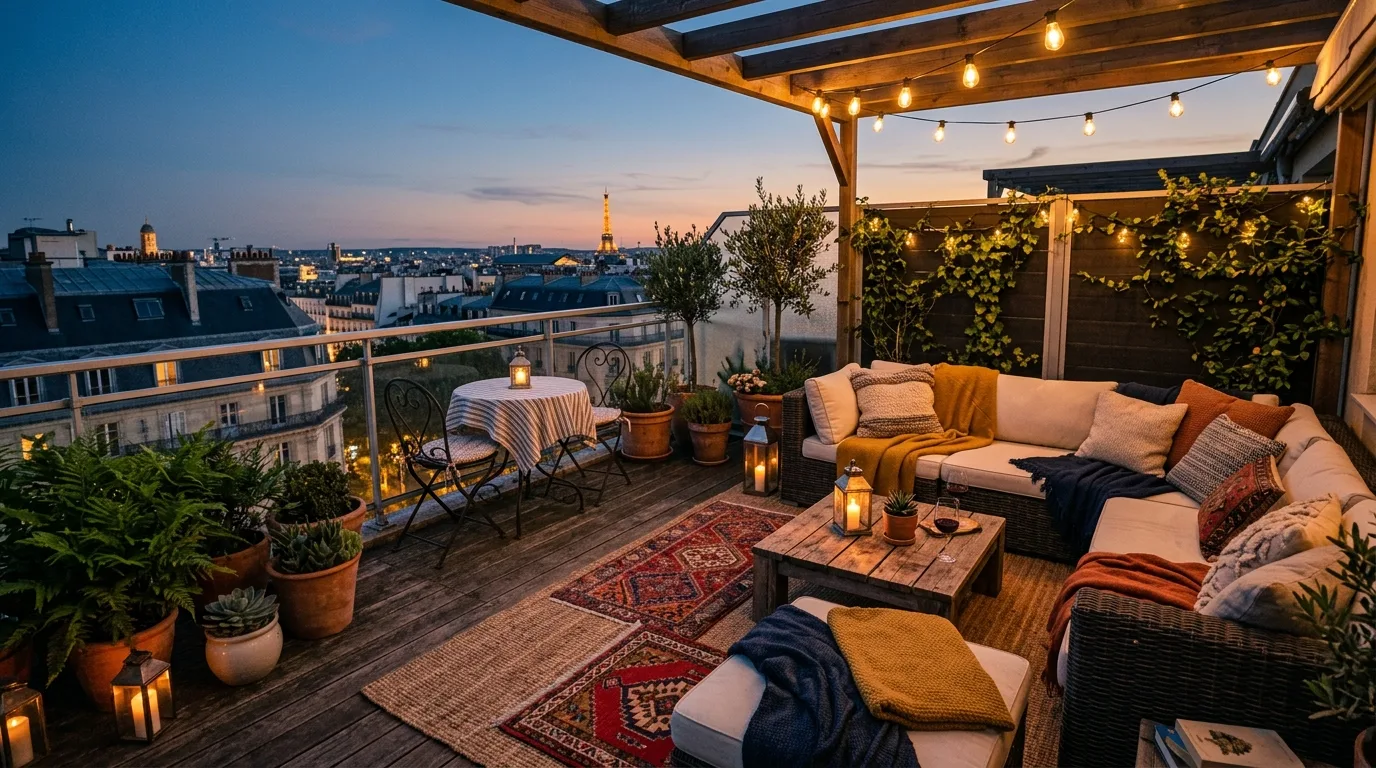
7. Use planters to divide functions naturally
Planter boxes are one of the smartest rooftop tools because they add greenery while also shaping privacy and layout. They can separate areas without making the terrace feel blocked off.
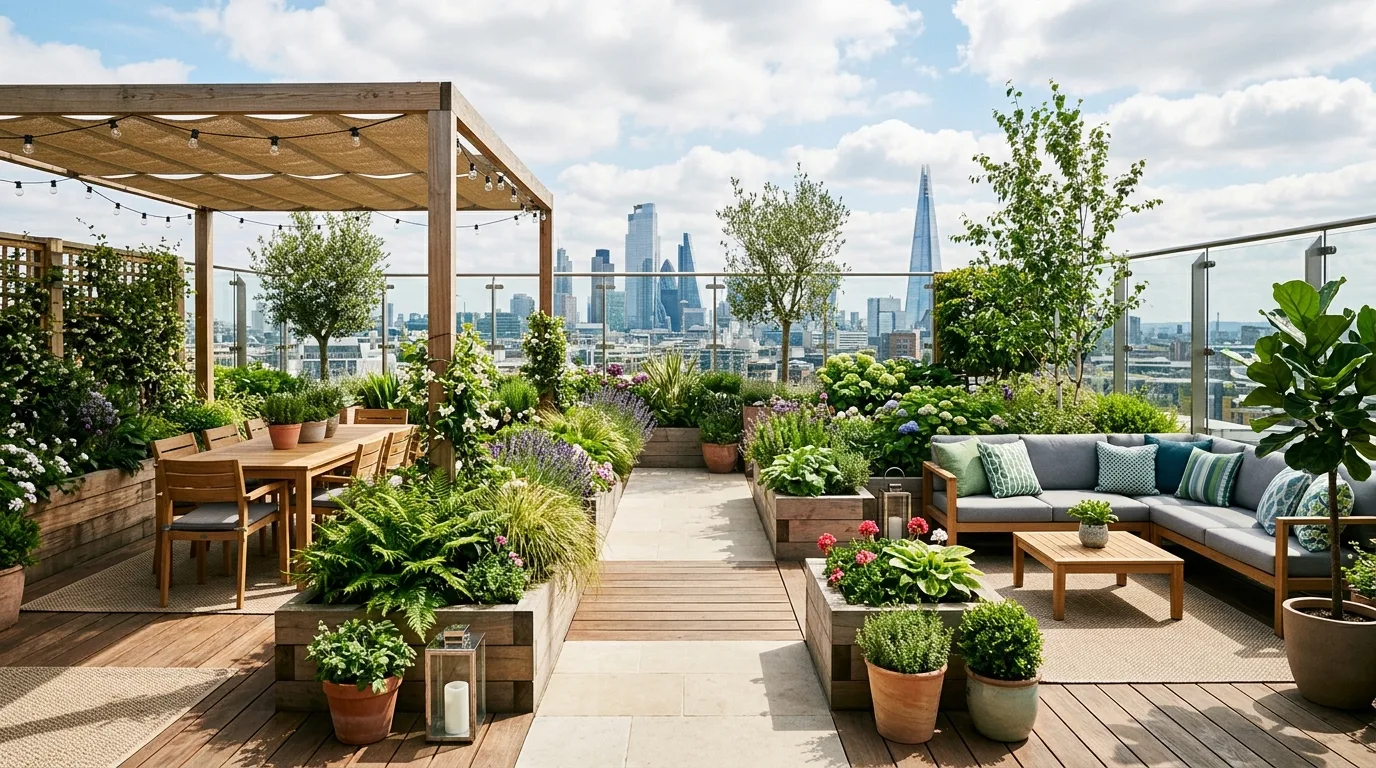
8. Give the dining zone a strong visual anchor
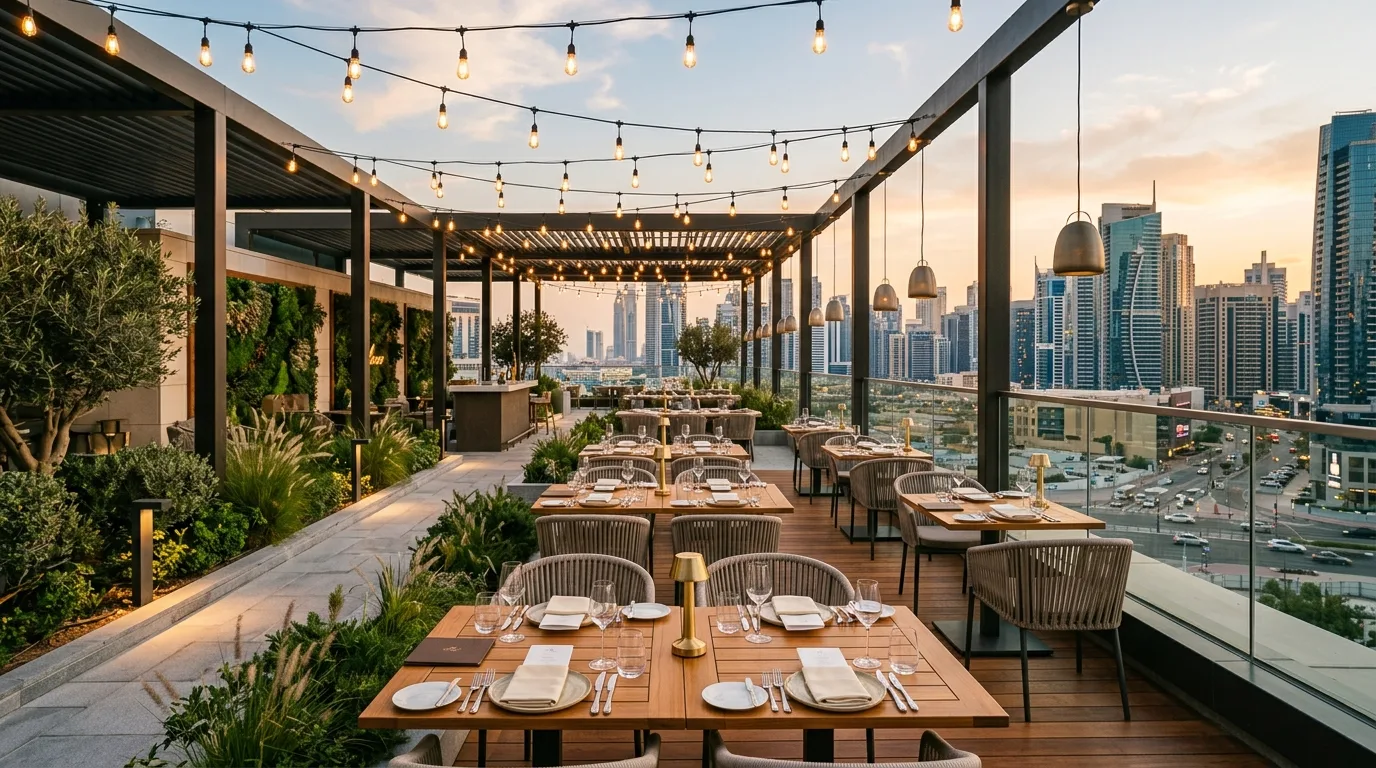
A table, chairs, and lighting arrangement should feel intentional, not just fitted wherever there is room left. On a rooftop, a well-anchored dining space helps the whole plan feel complete.
9. Decide early where shade should go
Pergolas and shade structures influence every other layout decision, from furniture placement to circulation. They are best treated as a planning priority, not an afterthought.
10. Use smart space-saving furniture on small rooftops
Compact patios benefit most from foldable, movable, or dual-purpose pieces. They let the rooftop stay flexible without sacrificing comfort or style.

11. Plan a fire-pit lounge carefully
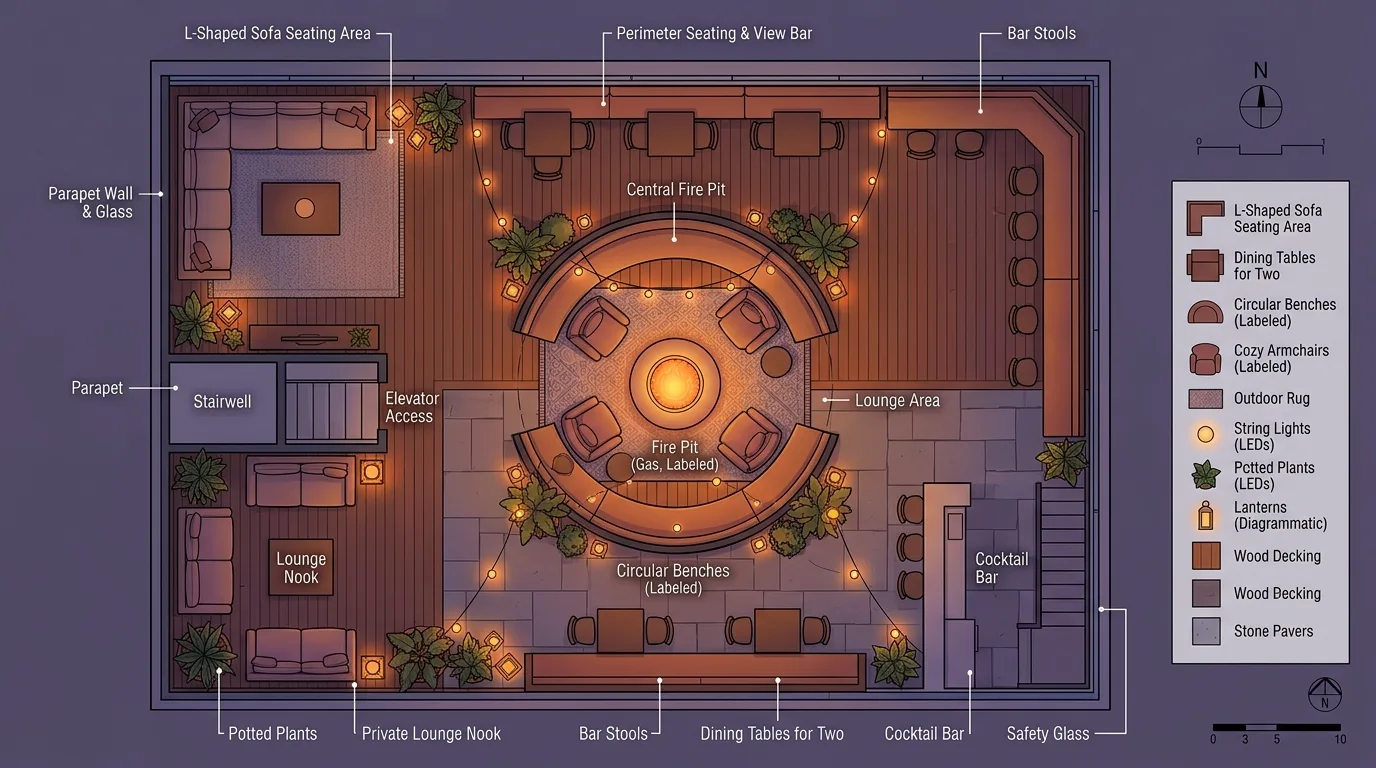
A rooftop fire feature can become a wonderful focal point, but only when the seating around it is clearly organized. A defined lounge circle helps the space feel safe, social, and intentional.
12. Let the final rooftop plan feel balanced as a whole
The strongest rooftop patios do not just have good furniture. They have a complete logic that ties seating, dining, greenery, lighting, and circulation together against the city backdrop.